
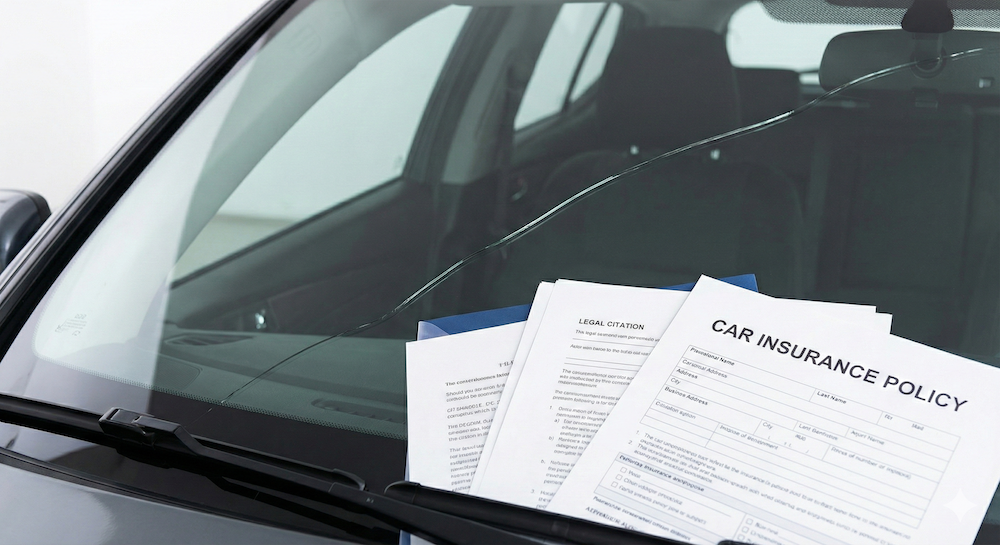
When a vehicle’s windshield sustains damage, drivers are often uncertain about their legal obligations and the potential liabilities of continuing to operate the vehicle. The legality of driving with a cracked windshield is not governed by a single federal mandate for passenger vehicles, but rather by a patchwork of state-specific statutes.
Understanding these legal nuances is essential for avoiding traffic citations and maintaining regulatory compliance.
State Law Variations and “Acute Areas” The legality of a damaged windshield generally hinges on two factors: the location of the damage and the extent of the impairment.
- The Acute Area: Most jurisdictions have strict laws regarding damage within the “acute area” of the windshield. This is defined as the driver’s critical viewing area, typically directly above the steering wheel and within the sweeping path of the windshield wipers. Damage here is almost universally illegal.
- Size Constraints: State traffic codes often specify exact dimensions. For example, some states may prohibit any cracks longer than 8 inches, or prohibit “star” chips larger than 1.5 inches in diameter, regardless of their location on the glass.
- Federal Context: While passenger vehicles are subject to state laws, it is worth noting that the Federal Motor Carrier Safety Administration (FMCSA) strictly regulates commercial vehicles, explicitly prohibiting cracks or chips larger than 3/4 of an inch in the driver’s viewing area.
Secondary Legal and Financial Implications: Beyond a standard traffic citation, a damaged windshield carries additional consequences:
- Probable Cause: A visibly cracked windshield provides law enforcement with probable cause to initiate a traffic stop, which can lead to further scrutiny of the vehicle and driver.
- Liability in Accidents: If you are involved in a collision and the opposing counsel can prove that a pre-existing windshield crack obstructed your vision, it could significantly impact the determination of fault and your subsequent liability.
- Insurance Considerations: From a risk-management perspective, ignoring a crack is ill-advised. Most comprehensive auto insurance policies cover glass repair. Timely repair prevents the crack from spreading due to temperature fluctuations, which often necessitates a full, more expensive windshield replacement.
Conclusion: To ensure compliance with local traffic laws and mitigate both safety and liability risks, drivers should consult their state’s specific motor vehicle codes. As a best practice, immediate professional assessment and repair of any windshield damage is highly recommended.
