
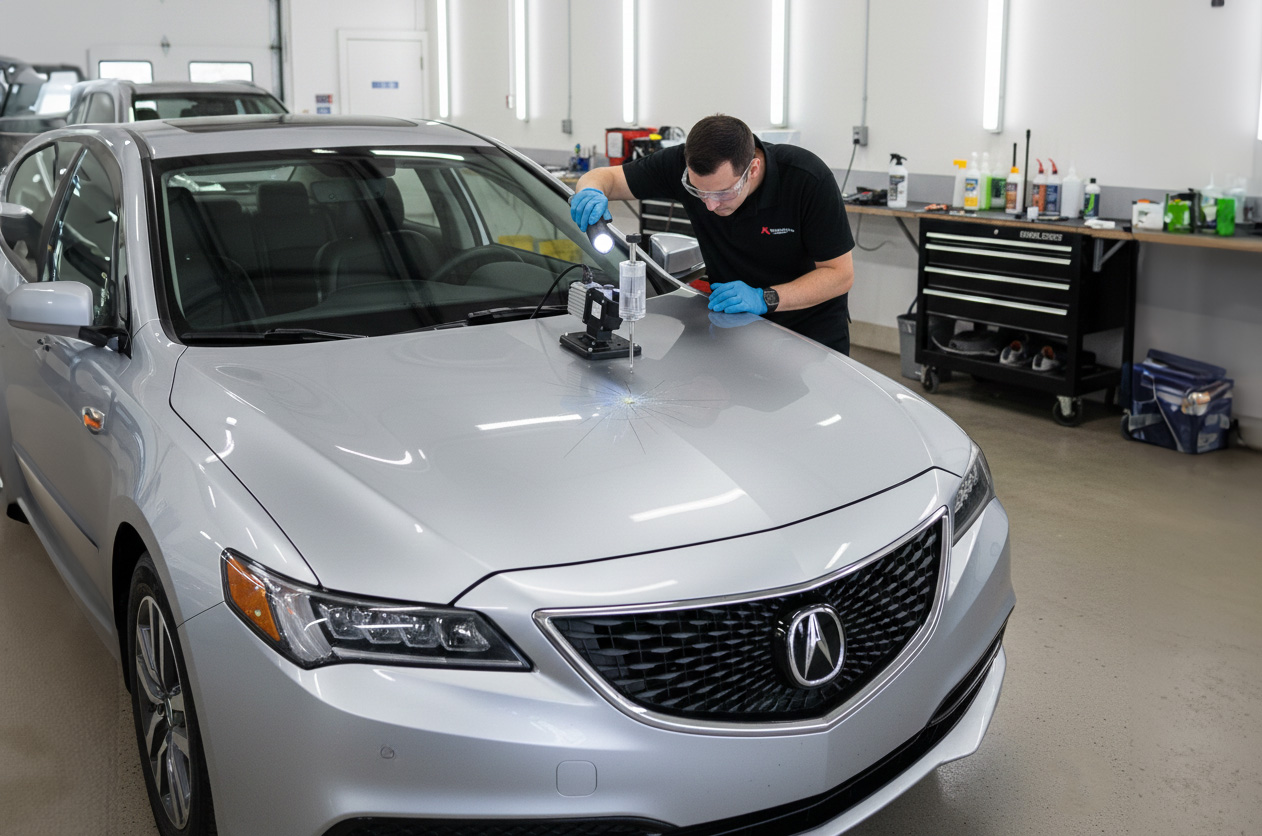
Your windshield does far more than block wind and debris. It supports your vehicle’s structural integrity, keeps you safe during collisions, and works with modern safety systems like ADAS (Advanced Driver Assistance Systems). When damage occurs, most drivers wonder whether they need a full replacement or if a simple repair will solve the problem.
This 2025 edition guide explains the windshield repair process, the different types of chips and cracks, and how to know when repair is possible versus when replacement becomes necessary.
Why Windshield Damage Matters More in 2025
Modern windshields have evolved significantly. With built-in sensors, cameras, acoustic layers, and specialty coatings, a single damaged spot can affect:
- ADAS calibration
- Lane keeping and collision avoidance cameras
- Structural roof support
- Airbag deployment
- Interior noise and climate efficiency
Because of these advancements, the decision to repair or replace a windshield is more important than ever.
Common Types of Windshield Chips and Cracks
Understanding the type of damage helps determine whether repair is a safe option.
1. Bullseye Chip
Appearance: A circular cone-shaped break often caused by a rock impact.
Repairable? Yes, as long as it is under about 1 inch in diameter and has not spread.
2. Star Break
Appearance: A central impact point with small cracks branching outward.
Repairable? Usually. These breaks can spread quickly, so early repair is important.
3. Combination Break
Appearance: A mix of bullseye and star break characteristics.
Repairable? Sometimes. Many shops can fix these if the total damaged area is under 2 inches.
4. Half-Moon Chip
Appearance: A partial or incomplete bullseye.
Repairable? Yes, and typically easy to repair if treated early.
5. Surface Pit
Appearance: A small blemish that does not penetrate the windshield layers.
Repairable? Often unnecessary. Surface pits are mostly cosmetic unless they are deep.
6. Long Crack
Appearance: A long line that extends across the windshield.
Repairable? Sometimes, but anything over 6 inches usually requires a replacement. In 2025, most auto glass professionals agree that long cracks are unreliable to repair.
Step by Step: The Windshield Repair Process in 2025
High quality windshield repair requires skill, specialized tools, and a strong understanding of glass structure.
Step 1: Inspection and Assessment
A technician evaluates:
- The depth of the damage
- Its location
- The risk of spreading
- Proximity to cameras or sensors
- Any contamination inside the crack
If it meets repair guidelines, the process continues.
Step 2: Cleaning the Damaged Area
The technician removes loose glass, dirt, moisture, or washer fluid that may have infiltrated the chip. Cleanliness is essential for proper resin bonding.
Step 3: Resin Injection
A bridge tool or injector is positioned over the break. Using a vacuum and pressure cycle, the technician removes air from the damage and injects resin into every small fracture. Modern resins used in 2025 bond more clearly and strongly compared to older materials.
Step 4: UV Curing
A UV light cures the resin until it hardens and bonds to the glass. Curing usually takes between 5 and 10 minutes depending on resin type and depth.
Step 5: Finishing and Polishing
Once cured, excess resin is removed and the surface is polished until smooth. A good repair restores strength, prevents spreading, and makes the damage far less visible.
When Can a Windshield Be Repaired?
Repair is usually possible when:
- The damage is smaller than a quarter
- Cracks are under 6 inches
- The chip is not in the driver’s direct line of sight
- The break is not on the glass edge
- The damage does not interfere with ADAS sensors
- Only the outer layer of the glass is affected
Many insurance companies still offer zero dollar windshield repair in 2025, making repair a cost effective solution.
When a Windshield Needs Replacement Instead
Some damage is too severe for safe repair. Replacement is recommended when:
- The crack is longer than 6 to 8 inches
- Damage interferes with ADAS cameras or sensors
- Multiple chips are clustered in the same area
- Cracks reach the windshield edge
- The inner glass layer is damaged
- There is damage on both sides of the laminated glass
- Your vehicle requires recalibration after service and the damage affects sensor accuracy
In 2025, many electric vehicles and advanced cars rely on precise windshield mounted sensors. In these cases, replacement and proper recalibration are essential for safety.
How Long Does a Windshield Repair Take?
Most repairs take about:
- 30 minutes in standard cases
- Up to one hour in cold weather or with complex damage
Unlike replacements, repairs do not require safe drive away time.
Will the Damage Still Be Visible After Repair?
A proper repair will:
- Make the damage 80 to 95 percent less visible
- Restore the windshield’s structural strength
- Leave a smooth and sealed surface
Repairs strengthen the glass rather than making the damage completely disappear. Deep impacts may still leave faint marks.
Why You Should Not Wait to Fix a Chip
Even a tiny chip can spread rapidly due to:
- Temperature changes
- Road vibrations
- Moisture entering the break
- Air pressure shifts
Small chips can turn into full cracks in a matter of hours, especially in extreme climates.
If Your Windshield Cannot Be Repaired, We Can Help
If the damage is too large or severe for repair, replacement is the safest option. This is especially important for vehicles with ADAS technology or windshield mounted sensors.
You can use the Glass.net free quote tool to compare prices from trusted local installers. You will receive:
- Real time pricing
- Options for mobile or in shop service
- Reviews and quality guarantees
- Fast scheduling
Get Fast, Free Windshield Replacement Quotes on Glass.net
To read more, visit blog.glass.net
